
marked
What Ireland’s Sheep Taught Me About Being a Sheep and The Good Shepherd
This past April, Ken and I sailed our floating home 4,000 miles across the Atlantic Ocean. We arrived in Ireland in July and spent about two months exploring her stunning, rugged western shorelines.
Something about this place has captured my heart and spiritual imagination. Recently, a local man asked me if I felt spiritually connected to the land. And I can say, without a doubt, I do. I don’t want to romanticize it. Like all nations, Ireland has a complex history, full of both beauty and brokenness. But exploring this land with ancient Christian roots, perhaps dating back to the 400s, has increased the breadth and depth of my faith.
Ireland has many modern economic engines—pharmaceuticals, chemicals, technology, and medical devices. But the places we visited weren’t booming cities, marked by the frenzied pace of life brought on by technological advancements. They were small towns and villages, along the west coast—some of which still speak Gaelic. They were lands whose local economies are still primarily shaped by fishing, agriculture, and livestock.
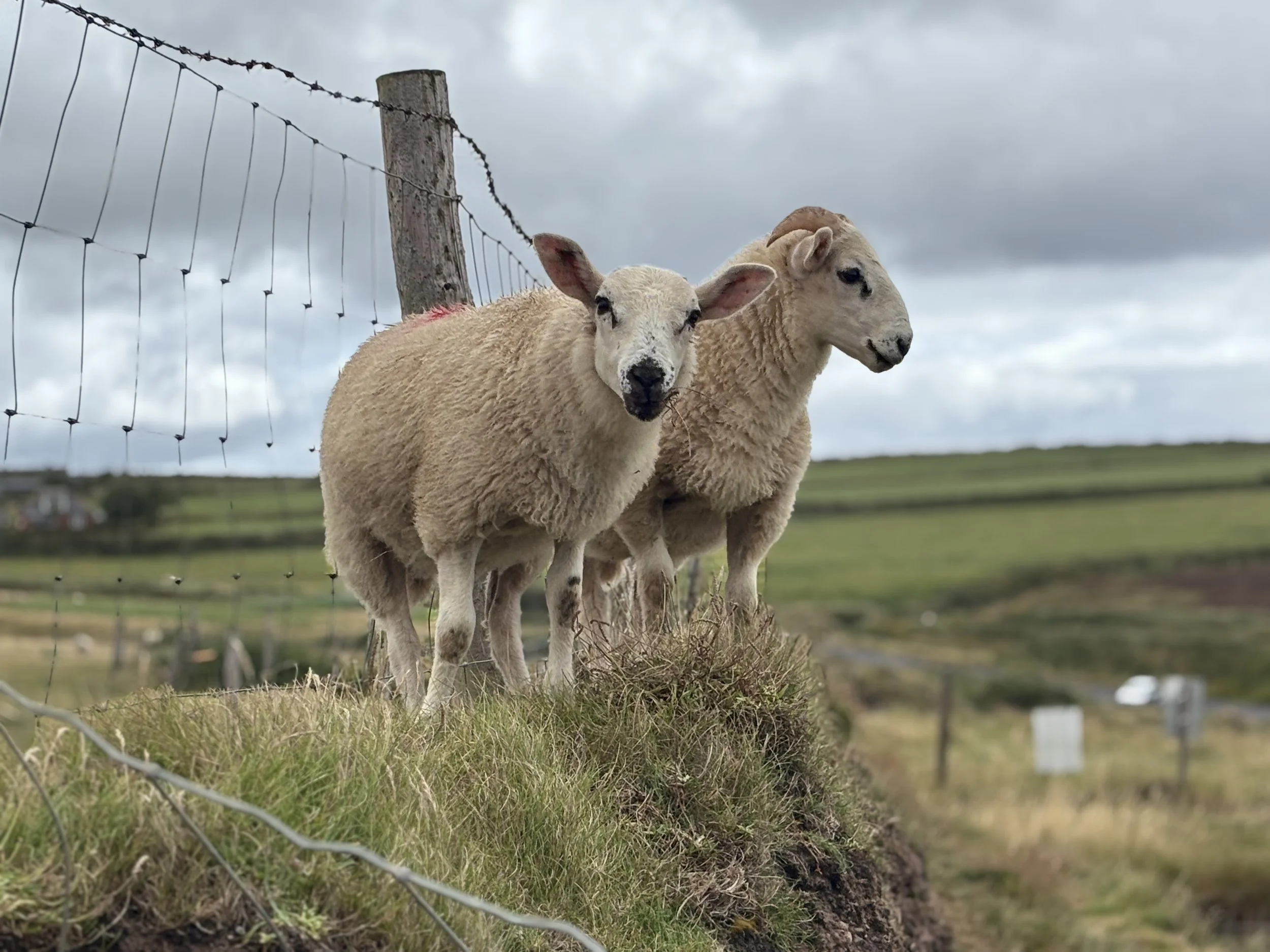
When I dreamed about crossing the Atlantic and exploring Ireland, Scotland, and England, I envisioned rolling green hills and lots of sheep. And Ireland lived up to every expectation! Millions of sheep decorate Ireland’s landscape. Rather than being corralled, sheep often gather and graze freely on communal lands, which meant we encountered them on every walkabout—whether strolling through the village, walking heather-laced hills, or hiking craggy coastlines. For a mildly obsessive animal lover like me, this was a major highlight! I have hundreds of pictures of sheep, and yet whenever I see them, I am compelled to take more.
We’ve seen all kinds of sheep: healthy and injured, young and old, black and white or a mixture of the two. We’ve seen them heavily laden with wool and freshly sheared. We’ve seen sheep safe within the fold and others separated from the flock. Most of them have been timid, but at least one was rather bold and very vocal. I still don’t know whether he was more interested in my lunch or saw us as a threat to the flock.
I’ve written on sheep and shepherds before (on sheep here and here and on sheep and shepherds in the context of the church: here, here, and here). But living in a land where walking among sheep in their natural habitat is commonplace made the Bible’s language of sheep and shepherds more alive for me. I no longer have to imagine it; I’ve seen what it looks like.
The Bible references sheep over 500 times. Many of those passages refer to literal sheep, but some are metaphorical, alluding to God’s people as sheep. Given the use of sheep metaphors in the Scriptures, you’ve probably heard at least one sermon about them. Sometimes, the pastor or speaker tells a tale or jokes about how dumb sheep are—which, as an aside, some studies suggest is not true.¹ Then, comparing us to sheep, the teacher segues into a lesson on our vulnerability to sin and our need for biblical authority and community to guide us. That’s not to say that we aren’t vulnerable to sin. We are. Or that we don’t need community to walk alongside us or wise counselors to guide us. We do. But the message can be somewhat reductionistic.
Spiritually and culturally, referring to people as sheep often has a derogatory connotation, meaning they are gullible, ignorant, and blindly follow. In other words, don’t be a sheep. It’s unfortunate that the church’s focus on sheep is often negative, when Scripture portrays them in much more complex and comprehensive ways.
Having encountered so many sheep over the last few months, I pay even more attention when I come across a passage that references them. So, when my daily reading a few weeks ago included a passage about God’s people being like sheep without a shepherd, I found myself pondering the perils sheep face when they don’t have a shepherd to provide for and protect them.
Sheep get scattered.
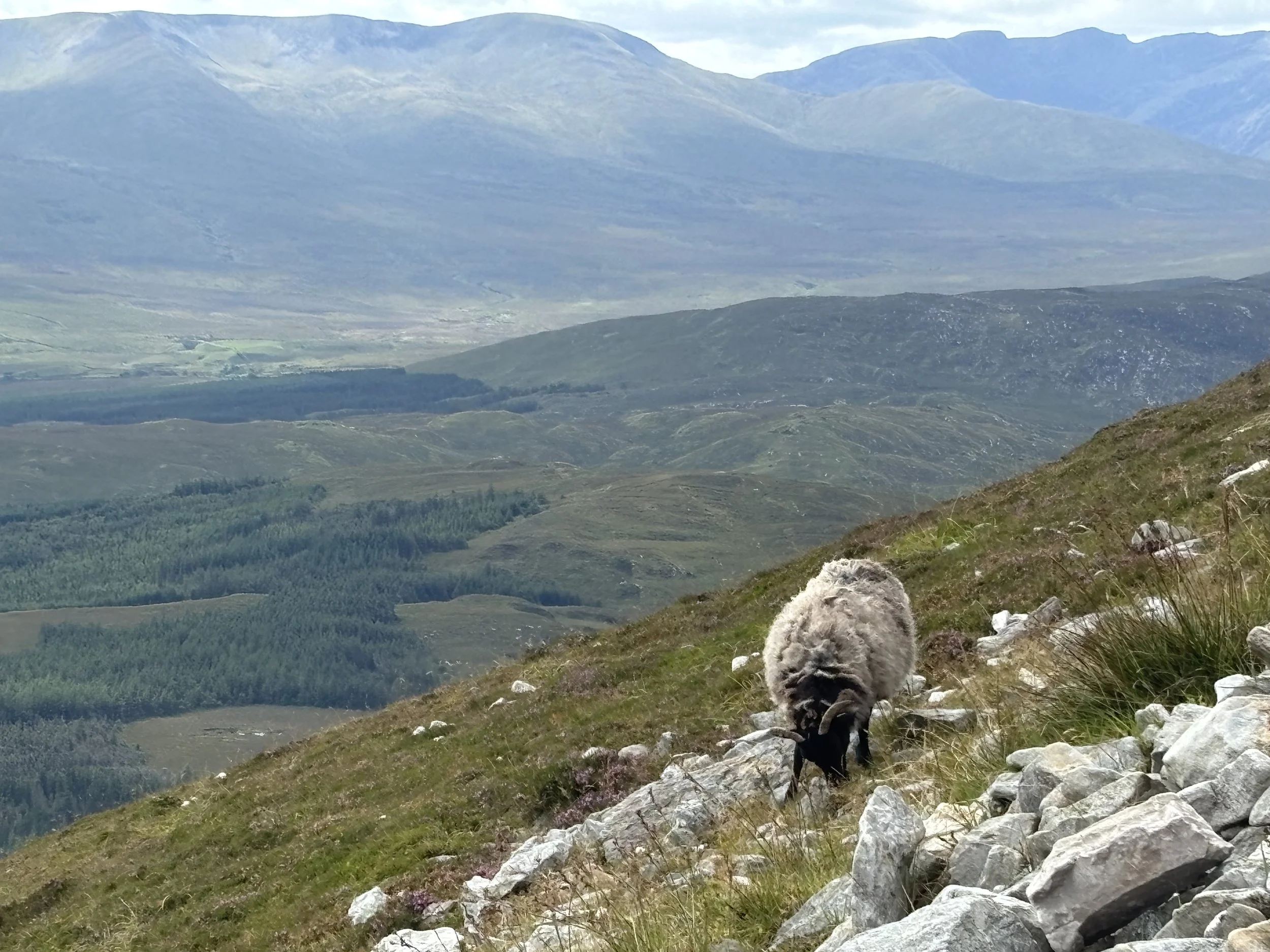
We regularly came upon large flocks of sheep while hiking and always with the same results. As we neared where they were grazing, the flocks would scatter, running down the trail ahead of us or off to the left or right. Most of the time, they would run off together as a group. But on one occasion, a small lamb ran off all by himself, scattered and separated from the flock. On another walk, a flock grazed together inside a fence, while two sheep found themselves on the opposite side, gazing through the fence at their mates and unable to rejoin the fold.
Sheep are herd animals—they live, move, feed, and respond to danger as a group. Scientific studies show that sheep separated from the flock experience both emotional and physiological effects: increased cortisol (stress), a reduced immune response, and lower growth rates. Some studies showed that the separated sheep spent more time standing alert and vocalizing (trying to communicate with their lost flock), and less time eating, drinking, and resting.² Scattered sheep cannot flourish.
A sheep that has been scattered needs the shepherd to gather him back to the fold.
Sheep get lost.
On another hike, I saw a lone lamb, running back and forth, crying out over and over, listening for a return call to lead him back to his fold. But none came. The lamb was small and defenseless. There are no apex predators in Ireland, but a lost young lamb is easy prey for small predators such as foxes or birds of prey. Without his flock, this little lamb was not only vulnerable to predators but also lacked the flock’s wisdom to guide and protect him from all sorts of danger. The flock, especially the lamb’s mother, is its primary source of safety, social development, and essential life skills.³
As I watched this lost lamb run around bleating, I sensed its stress. Without the shepherd to find it and return it to the safety of the fold, this little lamb is unlikely to survive.
A lost sheep needs the shepherd to come find him and bring him home.
Sheep get afflicted.
In Ireland, as I am sure in all places, sheep face all manner of afflictions. Parasites cause anemia and death. Blue tongue—a disease spread by biting midges—can cause fever, swelling, lameness, breathing problems, stillbirth, and even death. And mites cause sheep scab, a highly infectious disease that can spread throughout the flock, causing severe itching, wounds, and wool loss.
But those are only a few of the threats to a sheep’s overall health. The rugged land poses all manner of threats. Walking through Ireland, we saw all kinds of terrain—gently rolling hills, grassy valleys, rocky shorelines, and steep cliffs. One misstep could send a sheep plunging to their death below. Sometimes the ground was pitted with small holes covered by grass. An unsuspecting sheep could step into one of those small holes and break a leg. I saw more than one sheep with a severe limp.
Some of the sheep we encountered were so heavily laden with wool (and one in particular was so overweight) that if they found themselves on their back, they would be unable to right themselves, which could cause them to suffocate or die within hours.
A sheep needs the shepherd’s care not only to protect it from affliction but also to provide necessary care when it is afflicted.
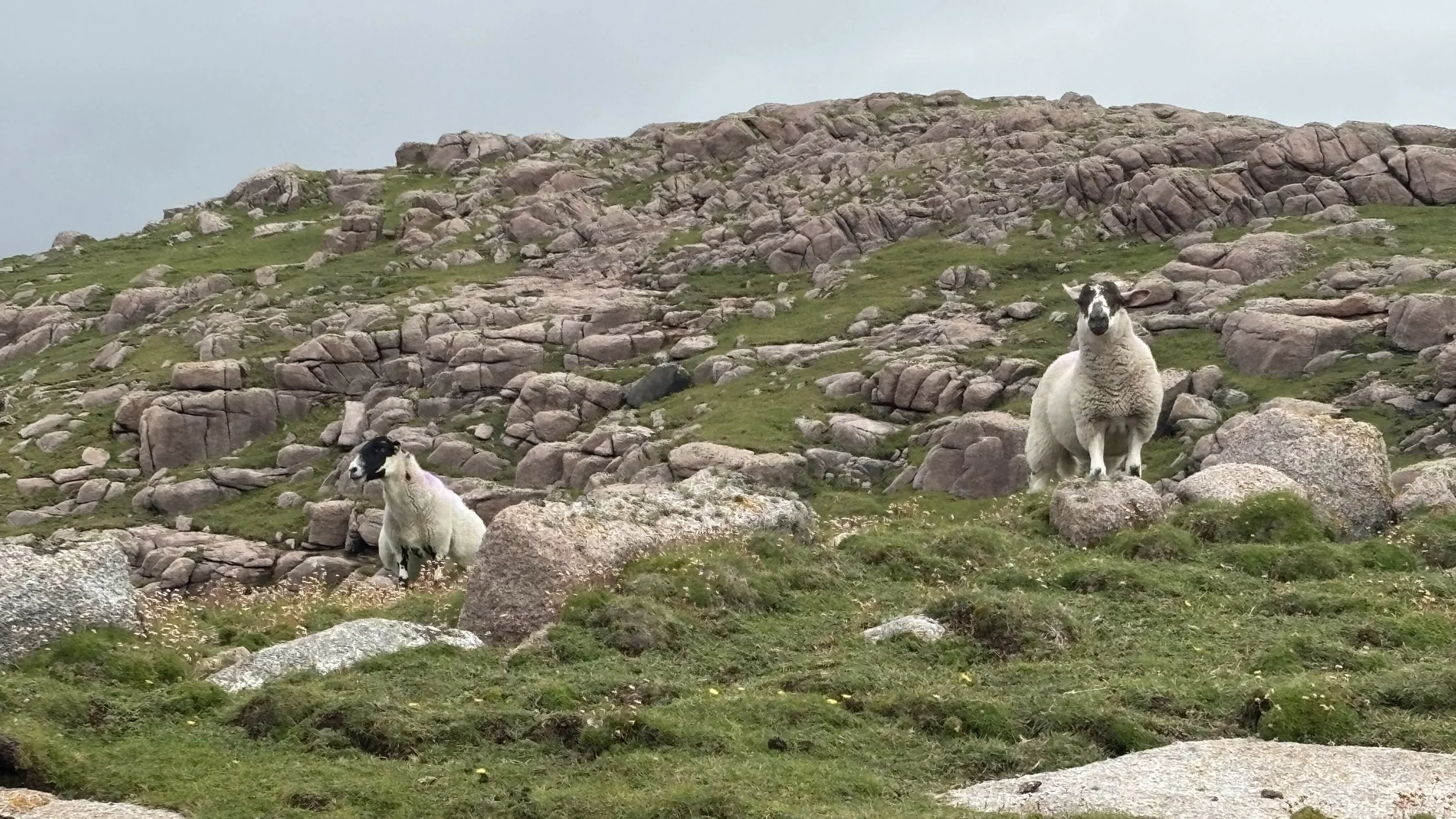
So contrary to popular belief, sheep aren’t dumb, but they do get scattered, lost, and afflicted. And they cannot fix any of this themselves. They may be able to survive without a shepherd, but they cannot thrive. They need the care and protection of the shepherd—a truth highlighted by former shepherd, W. Phillip Keller, in his book, A Shepherd Looks at Psalm 23:
“The strange thing about sheep is that because of their very makeup it is almost impossible for them to be made to lie down unless four requirements are met. Owing to their timidity they refuse to lie down unless they are free of all fear. Because of their social behavior within a flock, sheep will not lie down unless they are free from friction with others of their kind. If tormented by flies or parasites, sheep will not lie down. Only when free of these pests can they relax. Lastly, sheep will not lie down as long as they feel in need of finding food. They must be free from hunger. It is significant that to be at rest there must be a definite sense of freedom from fear, tension, aggravations, and hunger.” ⁴
It is the shepherd’s job to provide all the care they need. Only the shepherd can provide the sheep with release from these anxieties, making it possible for them to “lie down, to rest, to relax, to be content and quiet and flourishing.”⁵
The shepherd is essential to the sheep.
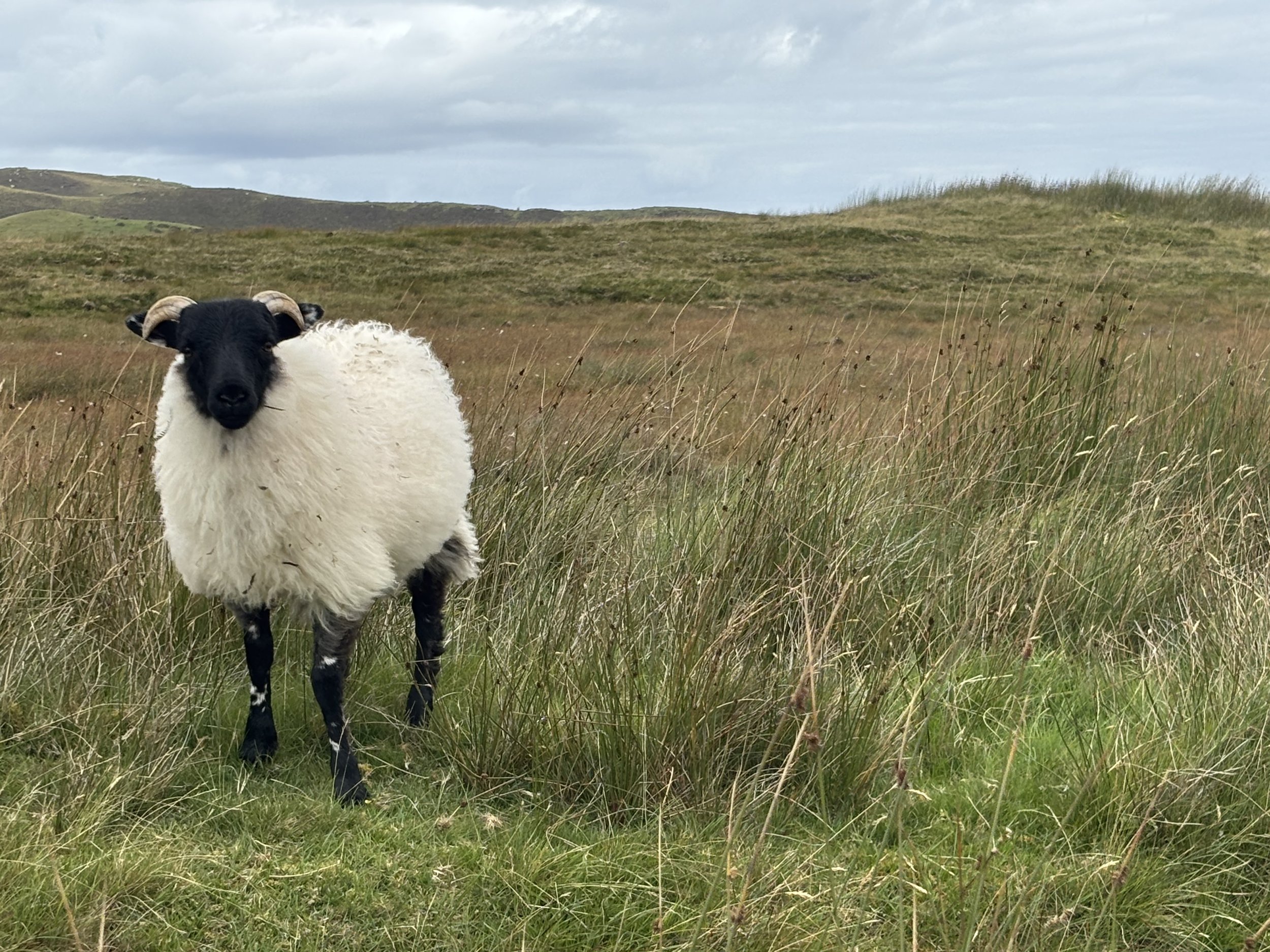
Like the sheep I encountered in Ireland, we too get scattered, lost, and afflicted.
In the Scriptures, God’s sheep get scattered for a variety of reasons: because we don’t have a shepherd (Ezekiel 34:5-6), because of bad shepherds (Jeremiah 10:21, 23:2; Ezekiel 34:5-6), or by God as judgment for our sin (Jeremiah 31:10; Psalm 44:11).
We get lost, sometimes as the result of willful rebellion—straying after greener pastures (Isaiah 53:6, Luke 15:3-7)—and other times the result of mindless wandering (Ezekiel 34:6, Psalm 119:176).
And, in this broken world, we experience all manner of affliction—emotional, social, mental, and physical. What’s interesting, however, is that Scripture doesn’t attribute this affliction to a broken world or the people’s sin; the sheep are “afflicted for lack of a shepherd” (Zechariah 10:2b).
And the Lord condemns the shepherds’ failure to strengthen the weak, heal the sick, seek the lost, or bandage the injured (Ezekiel 34:4).
God cares deeply about the needs of his children, something we see clearly in passages like Ezekiel 34 and Jeremiah 23:1-8 where God rebukes Israel’s shepherds for their severe neglect and mistreatment of his sheep. In fact, he cares so much for the sheep that he takes the responsibility to shepherd his people squarely on his own shoulders:
“I myself will search for my flock and look for them. As a shepherd looks for his sheep on the day he is among his scattered flock, so I will look for my flock. I will rescue them from all the places where they have been scattered on a day of clouds and total darkness. I will bring them out from the peoples, gather them from the countries, and bring them to their own soil. I will shepherd them on the mountains of Israel, in the ravines, and in all the inhabited places of the land. I will tend them in good pasture, and their grazing place will be on Israel’s lofty mountains. There they will lie down in a good grazing place; they will feed in rich pasture on the mountains of Israel. I will tend my flock and let them lie down. This is the declaration of the Lord God. I will seek the lost, bring back the strays, bandage the injured, and strengthen the weak, but I will destroy the fat and the strong. I will shepherd them with justice.” Ezekiel 34:11-16, emphasis mine
Sheep without a shepherd lack the comprehensive and attentive care that enables them to flourish. A good shepherd protects, gathers, seeks, carries, binds, heals, and leads his sheep.
When God saw that there was no shepherd to provide this level of care for his sheep, he promised to personally shepherd his people. And when he wanted to comfort them, the language he used was that of a shepherd who feeds his flock, carries the lambs close to his heart, and gently leads those with young (Isaiah 40:11).
These passages display God’s nurturing heart toward those who are his. He is a shepherd attuned to the needs of his sheep and committed to their care. He refuses to allow his people to languish like sheep without a shepherd.
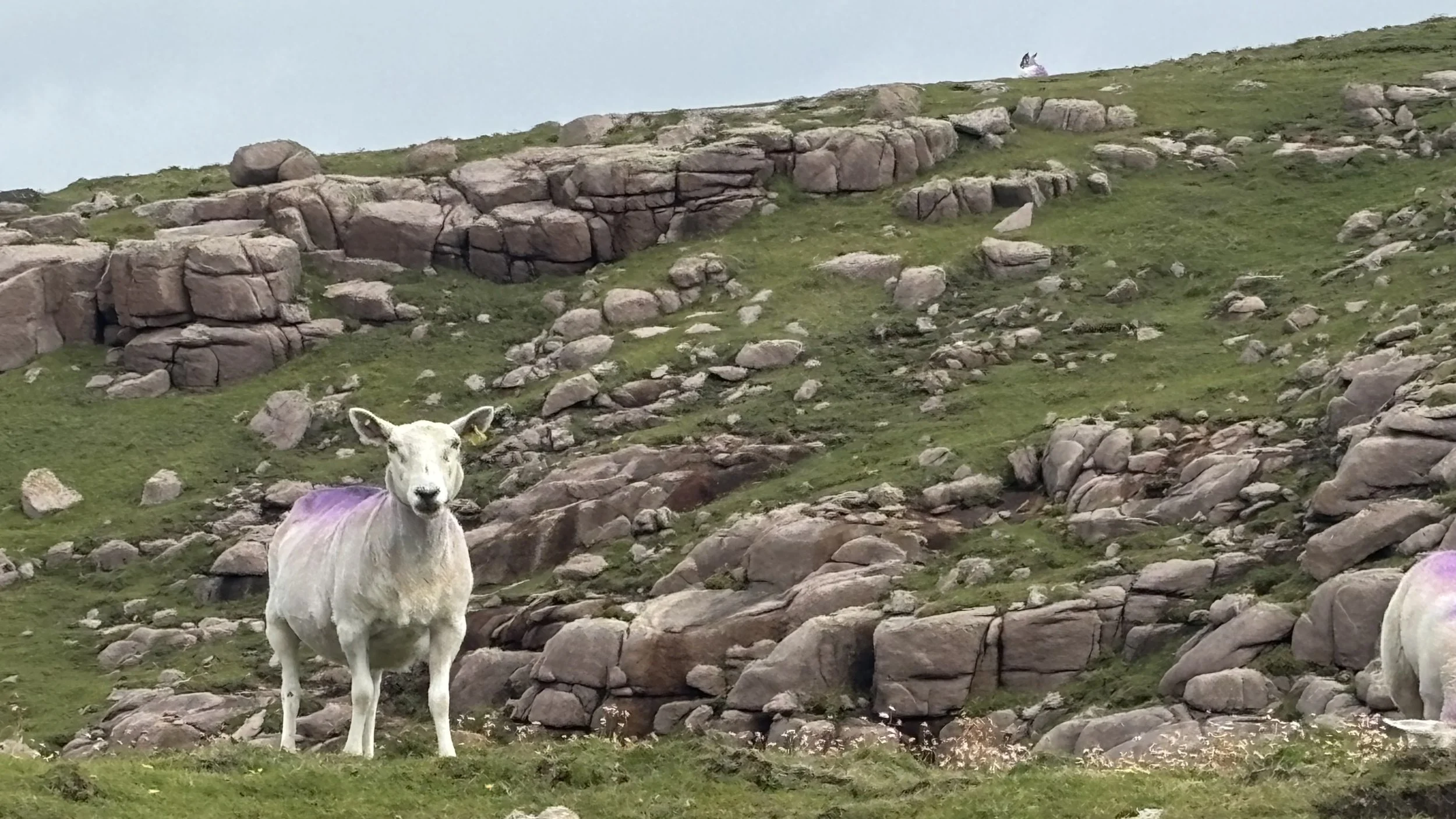
Six centuries after God promised to shepherd his people, Jesus—God enfleshed—stands among them as the Good Shepherd (John 10). He doesn’t neglect or abandon them. Instead, Scripture says he looked on them with great compassion because they were harassed and helpless, like sheep without a shepherd (Matthew 9:35-37). Interestingly, a literal translation of “harassed” is “cast down.” And cast is the term sheep farmers use for a sheep that is stuck on its back. A cast sheep is helpless and unable to right itself. If they remain cast for too long, they experience increased pressure and bloating, exhaustion and panic, and eventually suffocation and death.
When Jesus sees his sheep—cast and helpless with no one to right them—he is moved with compassion. He moves toward them, righting them so that they may flourish under his care. As the Good Shepherd, Jesus not only provides for their spiritual needs—teaching them many things—but he also attends to their physical needs, feeding more than five thousand of them with five loaves of bread and two fish (Mark 6:30-44), and healing every disease and affliction (Matthew 9:35). And he is unwilling to let even one of his sheep be lost (Luke 15:1-7). Where the other shepherds allowed God’s sheep to be scattered, lost, and afflicted, Jesus willingly laid down his own life to protect and provide for his flock (John 10:1-8).
Through Jesus, God has provided an eternal Good Shepherd for his sheep.
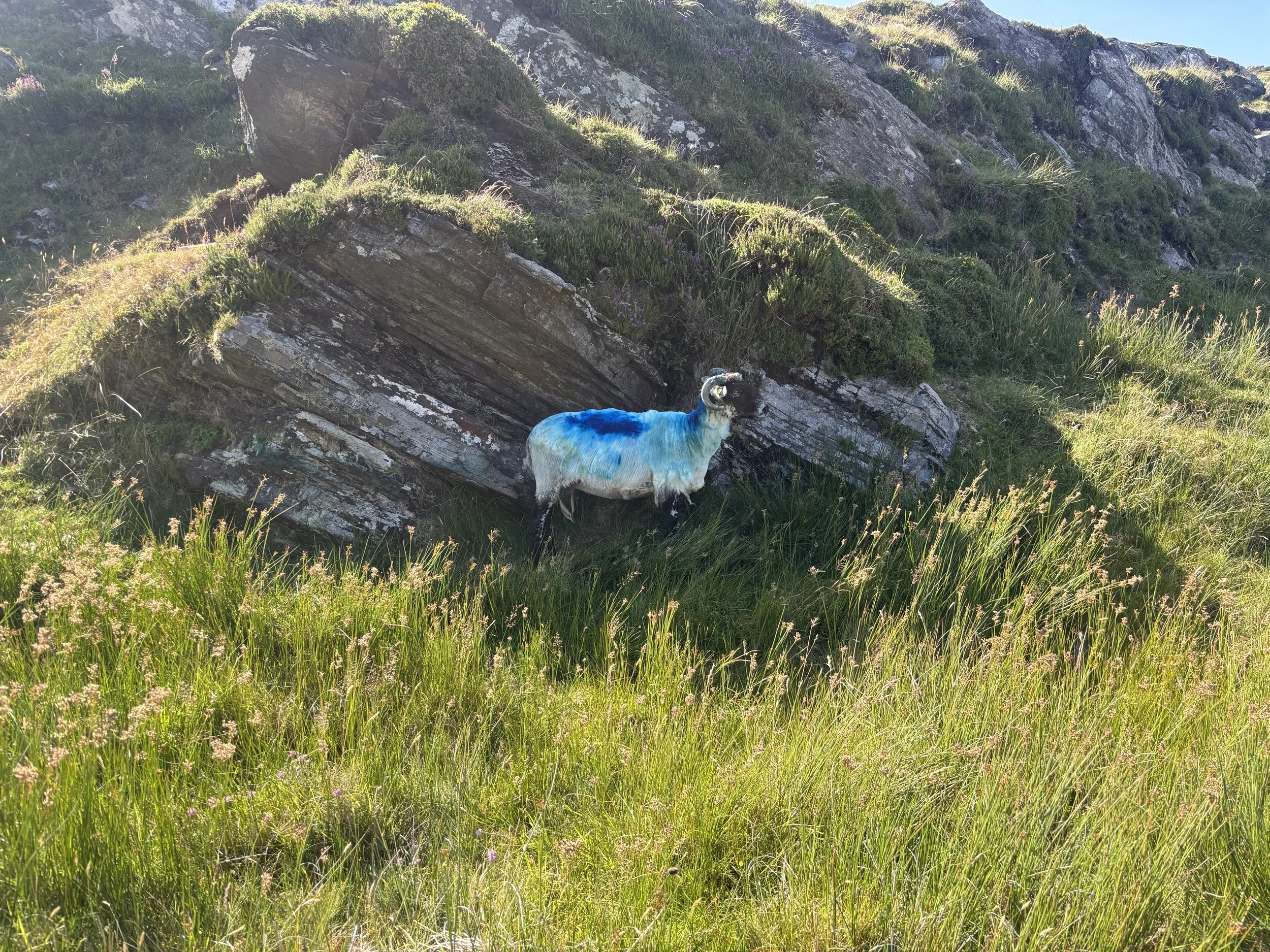
I know what it is to be a sheep. Like those sheep in Ireland, I get scattered, lost, and afflicted. I know my vulnerabilities and frailties. I know my need. I know my propensity to wander off or find myself lost. I know what it’s like to navigate treacherous terrain where I am vulnerable to predators and other dangers. I know what it’s like to be cast, unable to get back on my feet and suffocating under the pressure of this world. I know the agony of affliction and the allure of sin. And I know my need for a shepherd.
I noticed one more similarity between the sheep that dotted Ireland’s landscape and me. Each one was marked—its back painted with vibrant pinks, purples, blues, or oranges. These markings enabled the shepherd to identify his sheep, to know which ones were his.
As God’s sheep, we, too, are marked. We bear the seal of the Holy Spirit, who identifies us as God’s own (2 Corinthians 1:22). Jesus knows which sheep belong to him (John 10). He is our God, our Good Shepherd, and we are the people of his pasture, the sheep under his care (Psalm 95:7).
Whether we have wandered off in sin, been scattered by bad shepherds, are lost and unable to find our way back, or are afflicted by suffering, we are not sheep without a shepherd. He knows who are his. And God himself shepherds us.
You may feel lost, but your Good Shepherd knows exactly where you are. He will never forget or abandon you. He will come find you. You may have been scattered—neglected or mistreated—by church leaders or other believers. But your Good Shepherd will gather you to himself and attend to you with great care. You may be afflicted—emotionally, spiritually, or physically—but your Good Shepherd carries you in his arms, close to his heart. You may be cast down and unable to right yourself, suffocating under the pressures of this world. But your Good Shepherd will put you back on your feet and give you strength to withstand the burdens of this world. You may have run off in search of greener pastures, but the Good Shepherd will find you and restore you to his fold. You may feel all alone, but the Good Shepherd leaves the ninety-nine to find the one.
So be a sheep and entrust yourself to the skillful and compassionate hands of the Good Shepherd.
Footnotes:
All pictures are from my time in Ireland this summer.
¹ Some studies have shown that sheep can remember the faces of more than fifty other sheep, can recognize familiar human faces, have excellent spatial memory, and have advanced learning capabilities. See:
Schoneian, Susan, “Are Sheep Stupid?”, http://www.sheep101.info/stupidsheep.html
² De, Kalyan, et al. “Effect of Short-Term Seclusion of Sheep on Their Welfare Indicators.” Journal of Veterinary Behavior, vol. 27, 2018, pp. 1–7. Elsevier, https://doi.org/10.1016/j.jveb.2018.05.007.
³ Goodling, Kim. “How Ewes Nurture and Teach Their Lambs.” Living with Gotlands, Feb. 2025, https://www.livingwithgotlands.com/2025/02/how-ewes-nurture-and-teach-their-lambs/.
⁴ Keller, W . Phillip. A Shepherd Looks at Psalm 23. Grand Rapids: Zondervan, 2018, 50.
⁵ Ibid., 51.
To read more research about sheep, check out this article: https://www.wellbeingintlstudiesrepository.org/cgi/viewcontent.cgi?article=1374&context=animsent

Engage the Scripture
Read Psalm 23. How does David describe the care God provides as a shepherd?
Read Ezekiel 34. What are God’s concerns regarding the sheep? What does this say about God’s heart toward the sheep?
Explore Your Story
How have you heard sheep described in Christian contexts? How has this shaped your view of yourself, and, more importantly, how you believe God views you?
The article describes three reasons sheep need a shepherd: they get scattered, they get lost, and they get afflicted. Does one of these describe a current or previous experience? If so, describe what that experience feels like. What words, thoughts, or emotions would you use?
Have you ever experienced the care of the Good Shepherd during a time when you felt scattered, lost, or afflicted? Describe that care and how it impacted you.
Encounter the Savior
Scripture says Jesus was moved with compassion when he saw that the sheep were “cast down”—helpless, harassed, and unable to right themselves. Think about a current or past situation when you were scattered, lost, or afflicted—whether due to your sin or to circumstances outside your control. Imagine Christ moving toward you with compassion. What would he say? What would he ask? What would he require of you? What would he do?
In John 10, Jesus says he knows his sheep. What does it mean to be known by Jesus? How might the fact that Jesus knows you bring you comfort, courage, care, or conviction when you are scattered, lost, or afflicted?
Experience shalom
1. Find a quiet place where you can be undisturbed. Mute your phone. Maybe outside, if the weather permits. Or in a quiet corner in your house. Get into a comfortable position. Then listen to Psalm 23 on a Bible App. You might want to slow the playback speed, if possible, to give yourself time to focus on each truth in the psalm.
2. When you feel scattered, lost, or afflicted—like a sheep without a shepherd—pause and take a few moments to pray the following breath prayer:
Inhale: The Lord
Exhale: Is my shepherd.
You may want to do this a few times until your body responds (heart rate slows, breathing becomes steadier, mind no longer racing, shoulders release).
The Wholehearted Project is reader-supported.
If you enjoy or have benefited from the content, would you consider supporting future content by becoming a financial supporter through a one-time gift at Buy Me A Coffee or becoming a recurring supporter at Liberapay.