
The lord who heals you
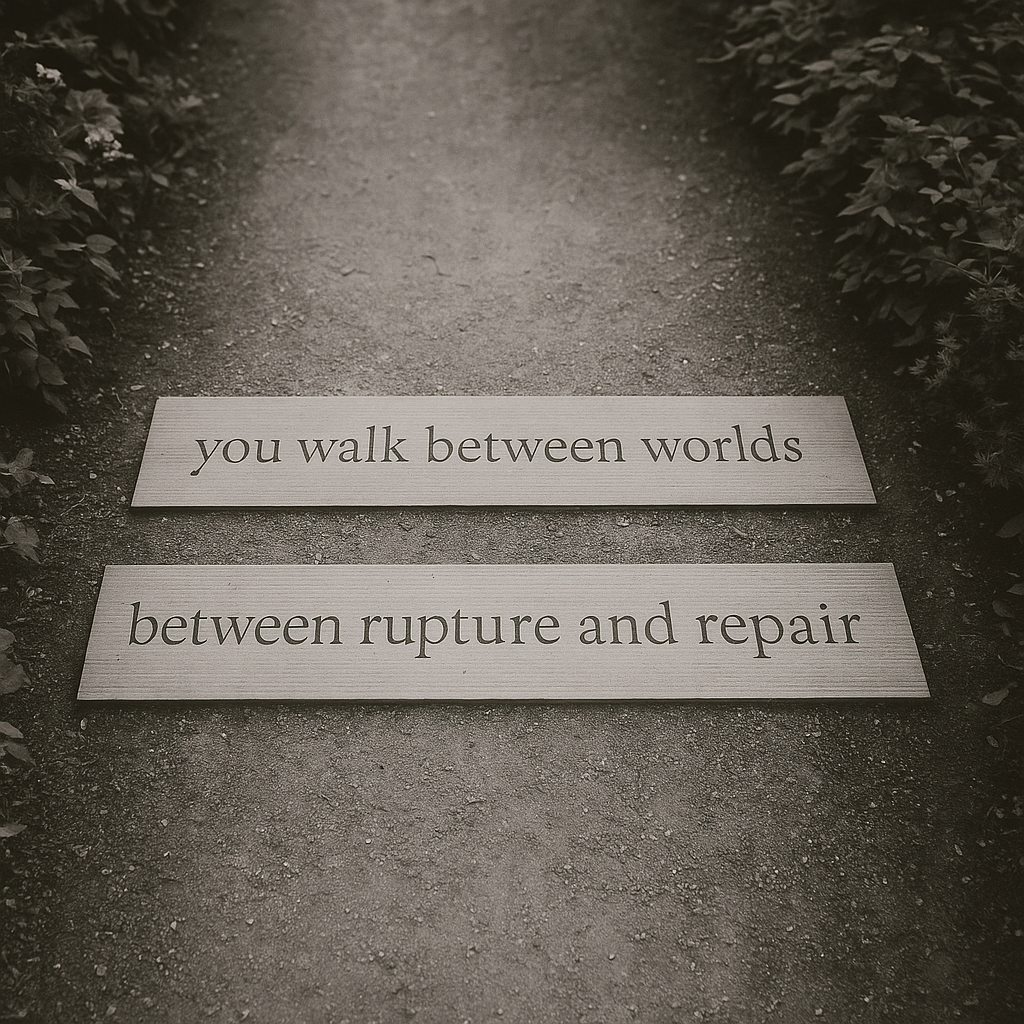
I have never been one who appreciated gardens. It’s not that I don’t enjoy their beauty; I do. I am just not typically drawn toward them. But on a trip to Maine last year, we visited the Coastal Maine Botanical Gardens in Boothbay.
It was a magical place! Gardens bursting with variety, flowers of every shape and color. Ponds full of lily pads hosted sun-bathing toads. Scenic bridges spanned ponds where turtle heads peered up at passersby. Thomas Dambos trolls loomed large as people waited patiently in line to get their pictures taken with them. There was even a fairy garden where kids of all ages built fairy houses from sticks, pine straw, tree bark, and whatever other natural elements they could gather.
As we wandered the 300-acre gardens, we came to a circular meditation garden paved with a mirror poem by Arisa White titled “revolution is ritual.” I walked the pavers, reading each phrase beneath my feet. I didn’t connect with the poem or most of its lines. But then I reached a paver that said, “You walk between worlds.” Something about the way she strung those words together resonated, so I paused to ponder before continuing along the path. Several stones later were the words, “between rupture and repair.” Again, I stopped, struck once again by the poet’s choice of words. Though the two phrases were physically far apart, the spiritual truth they hold couldn’t be closer.
Ironically, this in-between place of rupture and repair originated in a garden. Like the botanical gardens in Maine, this garden teemed with plants and creatures of all kinds. The Garden in Eden was characterized by shalom—perfect wholeness. God had provided everything creation needed to flourish physically, relationally, spiritually, and emotionally. Food was abundant. Intimacy with God and one another was unencumbered. And as God rested and reflected on his creation, he saw that it was very good.
In spite of that, Adam and Eve reached for the one thing they thought would enhance their already rich lives, but would ultimately bring death and destruction. What was whole, ruptured. Fruitfulness became famine. Vulnerability became violation. Companionship became contempt. Their cataclysmic choice has infected every generation since.
We are now people who live east of Eden—a place filled not with harmony but hostility. It’s a world haunted by the echoes of what once was and the longing for what is supposed to be. I saw this reality even in the Maine Botanical Gardens. When we first visited in spring, everything flourished. But when we returned months later, the decay had already begun—flowers wilting, leaves browning, beauty fading—reminding me that even the most carefully cultivated garden cannot escape the rupture.
The sin that originated with Adam and Eve in the Garden infects all of us. We often speak of sin as “missing the mark” or rebellion against God. And it is that. Humanity is capable of all manner of evils—from the trite to the tragic—whether it’s something as seemingly innocuous as indulging a little gossip or as heinous as genocide.
But it is also more than that. Sin is a blight on all of God’s creation. The rupture stretches far, wide, and deep, affecting every aspect of life—from politics to parenting, from ecosystems to economies, from nations to neighborhoods. The grass withers and the flowers fade. The ground languishes, and natural resources grow scarce. Young and old alike get sick and die. And all of us are walking wounded—bearing wounds from relationships that ended, dreams that never materialized, and words that cut deep and still haunt us. As those who follow Christ, we know and believe that isn’t the end of the story. Through Christ’s life, death, and resurrection, he has already begun to repair all that sin destroys. And yet, old ruptures remain, and new ones occur every day.
I write a lot about healing because I believe we desperately need it. As people who live east of Eden, we live in that messy middle between rupture and repair. It is precisely in this in-between space that we most desperately need a healer. And the good news is that we have one.
Scripture presents God as many things: Lord, King, Father, Savior, Judge. And among these names, one of the most tender and essential is healer. Healing is not just what God does; it is who God is.
The first time God describes himself as healer is in the book of Exodus. The Israelites were a people oppressed and subjugated in a foreign land. They had suffered the worst of humanity, but God was unwilling to allow their pain to go unaddressed. He heard their cries and saw their suffering. He rescued them, leading them out of the land of their suffering.
After God miraculously delivered the Israelites from their slavery in Egypt, Moses led the people of Israel away from the Red Sea and into the desert of Shur. There, they traveled through the desert for three days without finding any water. When they did finally find water at Marah, they couldn’t drink it because it was bitter. The name Marah itself means “bitter.” Here was water that couldn’t satisfy, abundance that couldn’t nourish. They were still caught in this place between rupture and repair. God had delivered them from the suffering of slavery, only to find themselves suffering from thirst.
Yet again, God met them in this place of brokenness and need. He moved toward the suffering of his people, giving Moses instructions to make the water drinkable, refreshing their flagging spirits and parched mouths with the life-giving water. And then he said to them,
“If you will listen carefully to the voice of the Lord your God and do what is right in his sight, obeying his commands and keeping all his decrees, then I will not make you suffer any of the diseases I sent on the Egyptians; for I am the Lord who heals you.”
Exodus 15:26, ESV
The Israelites’ journey out of the suffering of slavery and into the thirst of the wilderness illustrates life between rupture and repair. God was healing one aspect of their suffering, but he was not eradicating it altogether. And it is precisely here, in this in-between place, that God chose to introduce himself to them as healer.
The Hebrew word rapha, translated as “healer,” carries the idea of mending by stitching. Like stitching, healing is intimate, delicate work done over time with great intention. Rapha is used over 60 times in the Old Testament. Primarily, it means to heal or restore to health. It can refer to physical healing from a disease or injury; emotional or spiritual healing; or even the healing of a nation or land. Ultimately, it is the act of making something or someone whole or restoring them to an original state of well-being. God, as healer, repairs what is ruptured.
God’s desire and intent to heal is seen from Genesis to Revelation. He hears the cries of his people. He sees their suffering. He knows their pain. And he acts on their behalf throughout the ages.
Of the ruptures created by our own sin, he says:
I have seen what they do,
but I will heal them anyway!
I will lead them.
I will comfort those who mourn,
bringing words of praise to their lips.Isaiah 57:18-19a, NLT
He has seen our ways, the havoc sin has wreaked on our hearts and minds. He has seen what you do when no one else is watching. He knows your thoughts, motives, and darkest desires. He knows the secrets you keep and the little white lies you tell. He sees the ways your sins have created small fractures and cavernous ruptures in your relationships and in your own soul. And despite it all, he is committed to healing you. He is the Lord, your healer.
And to the ruptures we bear on our hearts, minds, bodies, and souls through no fault of our own, he says:
I will heal your broken heart and bind up your wounds. I will heal all your diseases and wipe away every tear. I will make everything come out right and put victims back on their feet. I will rid the world of all crying, mourning, and pain forever.(Psalm 147:3, Psalm 103:3,6; Revelation 21:4, paraphrase)
He sees the gaping wounds this world has inflicted on you. He knows how shattered your heart is. He hears your silent tears in the dead of night. He sees how you’ve been rejected, neglected, mistreated, or betrayed. He knows your unmet longings and hears your prayers for relief. And, he is committed to healing you. He is the Lord, your healer.
In his great compassion, mercy, and covenant love, the Lord moves toward his people:I have borne your griefs and carried your sorrows.
I was pierced for your transgressions and crushed for your iniquities.
I took the punishment that made you whole.
By my wounds you are healed.Isaiah 53:4,5 paraphrase
The Healer was wounded so that the wounded could be healed.
We still live between a world scarred by ruptures and a world to come that is healed and whole, but we have a God who heals.
He is the God who pursues the rebel and covers them.
He is the God who pursues the oppressed and frees them.
He is the God who seeks out the exiles and brings them home.
He is the God who touches the sick and restores them to health.
He is the God who mends the brokenhearted and binds up their wounds.
He is the Lord who heals you.
He is at work right now, rescuing, reviving, repairing, and restoring us from the blight sin has wrought. He is mending the fractured places and stitching up what is threadbare. And one day, the Sun of Righteousness will rise with healing in his wings, and we will go free, leaping with joy like calves let out to pasture (Malachi 4:2).
Until that day of joyous leaping comes, we live between rupture and repair. But we do not live without hope. We do not live without help. We have a healer who knows our wounds, who enters into our suffering, and who is committed to making us whole.
As he once said to a king who wept before him: “I have heard your prayer; I have seen your tears. Behold, I will heal you” (2 Kings 20:5).
He sees you. He hears you. And he will heal you. This is not wishful thinking or empty comfort—this is who he is.
He is the Lord, our healer.

Questions for Reflection
Engage the Scripture
The Hebrew word rapha (healer) carries the image of mending by stitching—intimate, delicate work done over time. How does this image change the way you think about God's healing work in your life?
Read Psalm 103 slowly, paying special attention to verses 1-5 and 8-14. As you do, notice the specific healing language David uses. What specific aspects of God's healing character does David highlight? Which one do you most need to hear today, and why?
Explore Your Story
Where do you see yourself living “between rupture and repair” right now? What are the wounds you carry—whether from your own choices or inflicted by others—that you long to see healed?
Reflecting on the distinction between ruptures “created by our own sin” and those we bear “through no fault of our own,” which type of wound do you find it harder to bring to God? Why do you think that is?
Encounter the Savior
The article states: “The Healer was wounded so that the wounded could be healed.” How does the reality of Christ’s wounds on your behalf change the way you approach him with your own brokenness?
God said to King Hezekiah, “I have heard your prayer; I have seen your tears. Behold, I will heal you.” What would it mean for you to truly believe that God sees your specific pain and hears your particular cries for healing?
Experience Shalom
Watch this brief clip of two young calves running and leaping for joy, then take a few moments to imagine yourself as the calf—healed, whole, and free in a world that is healed, whole, and free. What do you feel? What comes to mind as you imagine yourself in their place? What are you freed from? What are you freed for? How do you feel toward the one who freed you?
The Wholehearted Project is reader-supported.
If you enjoy or have benefited from the content, would you consider supporting future content by becoming a financial supporter through a one-time gift at Buy Me A Coffee or becoming a recurring supporter at Liberapay.